

Research Interests
- Science Education
- Pedagogy
- How people learn (k-16)
- Teacher education
- Educational Technology
- Visualization
- Classroom Integration
- Research Methods
- Interpretive and comparative research
- Case study and cross-case analysis
- Mixed methods
Title
Associate Dean of Research, Faculty of Education.
Professor, Science Education, Department of Curriculum and Pedagogy, Faculty of Education.
Education
University of Massachusetts-Amherst, US.
Biography
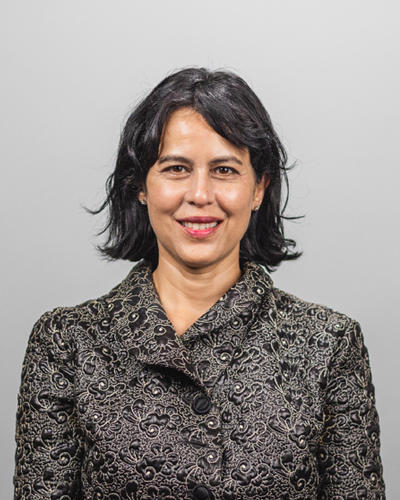
Samia Khan is a professor in science education with leadership experience in higher education. She is the Associate Dean of Research in the Faculty of Education. Prior to joining the faculty, she worked in the field of science as a scientist. Dr. Khan was also a Canadian public school science teacher with a permanent teaching certificate and experience as a Department Head. With questions from practice, Dr. Khan pursued graduate education after high school teaching. Since at UBC, she has published in major international peer-reviewed journals, such as: Science Education; Science Teacher Education; Educational Technology Research and Development; Computers and Education, and the International Journal of Science Education. She has also garnered substantial, continuous funding and been awarded the prestigious Prime Minister’s Award of Canada for Teaching Excellence in Science, Mathematics and Technology, the Association for Supervision and Curriculum Development Award, and the Canadian Society for the Study of Education’s New Scholar Award for her research. Dr. Khan served on the editorial review boards of major journals in education and science education, including the Curriculum Journal, the Journal of Science Teacher Education, and the Journal of Research in Science Teaching. Dr. Khan has delivered keynote presentations at the International Conference on Chemistry Education (ICCE, 2024) and the International Science Educators and Teachers Conference (ISET, 2021). Dr. Khan’s work was also cited in Tech Trends as top research that has shaped the field of educational technology and teacher education (Bakir, 2016). She is a former Director of the Master of Educational Technology (MET) program at UBC with over 430 graduate students enrolled.
Dr. Khan works internationally. Dr. Khan currently leads international research projects in Rwanda, Vietnam, Indonesia, Thailand, and Scotland and has vibrant partnerships in Germany. Dr. Khan has also been an Associate Dean of Research and a Chair of Education of a School of Education and Social Work in the UK. She has consulted with governments in the UK on teacher education and STEM education policy, including the Academic Reference Committee at the Scottish Parliament (2017-2020) and the UK All Party Parliamentary Group on Diversity and Inclusion in STEM.
Dr. Khan is actively researching the following research questions with graduate students:
- How ought we teach science and engineering, including to people from diverse backgrounds or those who have learning needs?
- What are the impacts of science teacher education that focuses on models and systems thinking?
- Why do simulation technologies contribute to changes in learning and teaching science at all levels?
- What is the value of the public’s engagement with scientific models?
Dr. Khan’s research has been funded by SSHRC, NSF, Peter Wall Foundation, Mastercard Foundation, and other international and national research bodies. She has held over 22 grants and financial awards. Dr. Khan is also a recipient of the UBC Research Award and has given talks around the world on research funding and international research collaborations.
Dr. Khan welcomes supervision inquiries from interested graduate students who have prior teaching experience, a background in science, and an interest in science learning.
Recent Publications only
Khan, S. (2025). Reasoning in chemistry teacher education. Chemistry Teacher International, 7(2), 345-357.
Gonzalez-Donoso, A., Khan, S., & Stewart, J. (2025, online). Science teacher’s assessment of their students’ models. International Journal of Science Education, 1-20. https://doi.org/10.1080/09500693.2025.2517889
Ndagijimana, J. B., Khan, S. & Lakin, E. (2025). Contribution of an instructional module incorporating PhET simulations to Rwandan students’ knowledge of chemical reactions, acids, and bases through social interactions. Chemistry Education Research and Practice, 26(1), 289-299.
Faikhamta, C., Khan, S., Prasoplarb, T., Praisri, A., & Suknarusaithagul, N. (2024). Pre-service teachers’ conceptual understandings of models and modelling in a STEM methods course. Research in Science Education, 54(6), 1137-1153.
Prasoplarb, T., Faikhamta, C., Khan, S., Lertdechapat, K., Van Bien, N., El Islami, R. A. Z., … & Hennessey, A. (2024). Science and engineering practices: A comparative analysis of Indonesian, Thai and Vietnamese science curricula. Asia-Pacific Science Education, 10(2), 350-380.
Ndagijimana, J. B., Mukama, E., Lakin, L., Khan, S., Munyaruhengeri, J. P. A., Dushimimana, J. C., … & Mushimiyimana, H. (2024). Contributions of GeoGebra software within the socio-cultural proximity on enhancing students’ conceptual understanding of mathematics. Cogent Education, 11(1), 1-23.
Ndagijimana, J. B., Khan, S., Habimana, O., Musengimana, J., Manirakiza, P., Dushimimana, J. C., & Mushimiyimana, H. (2024). The role of symbolab calculator usage to enhance pre-service primary teachers’ conceptual understanding in trigonometry through community of inquiry. PJLSS, 22(1), 5384-5397.
Faikhamta, C., Khan, S., Prasoplarb, T., Praisri, A., & Suknarusaithagul, N. (2024). Pre-service teachers’ conceptual understandings of models and modelling in a STEM methods course. Research in Science Education, 54(6), 1137-1153.
Khuyen, N. T. T., Van Bien, N., Khan, S., Faikhamta, C., & El Islami, R. A. Z. (2024, March). Impacts of method courses on Vietnamese pre-service teachers’ perceptions and practices: From the perspectives of model and modeling in STEM education. In Journal of Physics: Conference Series (Vol. 2727, No. 1, p. 012001). IOP Publishing.
Krell, M., Khan, S., Vergara, C., Cofré, H., Mathesius, S., & Krüger, D. (2023). Pre-service science teachers’ scientific reasoning competencies: Analysing the impact of contributing factors. Research in Science Education, 53(1), 59-79.
Khan, S. & VanWynsberghe, R. (2023). STEM funds of knowledge in community. In. P. Trifonis & S. Jagger (Eds.), Handbook of Curriculum Theory and Research. Springer International Handbooks of Education. Springer-Verlaag.
Bowen, G. M., Wiseman, D., Shanahan, M.-C., Khan, S., Gonsalves, A., Sengupta, P., Simms, W., Knoll, E., Carter, A. (2023). STEM in Canadian teacher education: An overview. In, Al-Balushi, S.M., Martin-Hansen, L., & Song, Y. (Eds.) Reforming Science Teacher Education Programs in the STEM Era: International Practices, Palgrave Macmillan.
Tani, M., Manuguerra, M., & Khan, S. (2022). Can videos affect learning outcomes? Evidence from an actual learning environment. Educational Technology Research and Development, 70(5), 1675-1693.
Islami E. Zaky*, Xue, S. *, Sari, I. J. *, Khwaengmake, V. *, Khan, S., Van Nguyen, B., Faikhamta, C., Nguyen, K., & Prasoplarb, T*. (2022). A comparison of school science curricula of Indonesia, Vietnam, and Thailand. Asia- Pacific Social Science Review, 22(2), 63-82.
Rock, T. & Khan, S. (2022). A Whiteheadian process perspective on model-based science teaching. In, F. Riffert & V. Petrov (Eds.) Education and Learning in a World of Accelerated Growth in Knowledge Generation-Current Trends in Process Thought. Cambridge Scholars Publishing, Newcastle, UK, 1-26.
Khan, S., & Krell, M. (2021). Patterns of scientific reasoning skills among pre-service science teachers: A latent class analysis. Education Sciences, 11(10), 647-656.
Krell, M., Khan, S., & van Driel, J. (2021). Analyzing cognitive demands of a scientific reasoning test using the Linear Logistic Test Model (LLTM). Education Sciences, 11(9), 472-488.
Select Previous Publications Only
Khan, S., & VanWynsberghe, R. (2020). A synthesis of the research on community service learning in preservice science teacher education. In Frontiers in Education, 5(45), 1-13.
Khan, S., & Krell, M. (2019). Scientific reasoning competencies: A case of preservice teacher education. Canadian Journal of Science, Mathematics and Technology Education, 19(4), 446-464.
Khan, S. (2013). The future of design of computer simulations and their activities. In J. Suits & M. Sanger (Eds.), Pedagogic roles of animations and simulations in chemistry courses, Washington: Oxford University Press.
Khan, S. (2011). What’s missing in model-based teaching? Journal of Science Teacher Education, 22(6), 535- 560.
Khan, S. (2011). New pedagogies on teaching science with computer simulations. Journal of Science Education and Technology, 20(3), 215-232.
Khan, S. (2008). Model-based teaching as a source of insight for the design of a viable science simulation. Technology, Instruction, Cognition, and Learning,6(2),63-78.
Trey, L.*, & Khan, S. (2008). How science students can learn about unobservable phenomena using computer- based analogies. Computers & Education, 51(2), 519-529.
Khan, S. & VanWynsberghe, R. (2008). Cultivating the under-mined: Knowledge mobilization through cross-case analysis. Forum: Qualitative Social Research, 9(1,34), 1-21.
Khan, S. (2008). Co-construction and model evolution in chemistry. In J. Clement and M. Rea-Ramirez (Eds.), Model based learning and instruction in science (pp. 59-78). Netherlands: Springer.
Khan, S. (2008). What if scenarios for testing student models in chemistry. In J. Clement and M. Rea- Ramirez (Eds.), Model based learning and instruction in science (pp. 139-150). Netherlands: Springer.
Khan, S. (2007). The case in case-based design of educational software: A methodological interrogation. Educational Technology Research and Development, 56(4), 423-447.
Khan, S. (2007). Model-based inquiries in chemistry. Science Education, 91(6), 877-905.
VanWynsberghe, R. & Khan, S. (2007). Redefining case study. International Journal of Qualitative Methods, 6(2,6), 1-10.
Yuretich, R., Khan, S., Leckie, M., Clement, J. (2001). Active-learning methods to improve student performance and scientific interest in a large introductory oceanography course. Journal of Geoscience Education,49(2), 111- 119.
Conference Presentations
International Keynote Addresses
Khan, S. (2024, July). Chemistry education to advance UN Sustainable Development Goals. Keynote address. International Conference on Chemistry Education (ICCE), Chonburri, Thailand.
Khan, S. (2023, December). The calm before the storm: Online science teacher education. Keynote address. Innovation in Learning Instruction and Teacher Education International Conference, Hanoi, Vietnam.
Khan, S. (2023, March). International research collaborations. Keynote address. AARE (Australian Association for Research in Education) Joint SIG (STEM, CHAT, Global Contexts) and OCIEs Special Seminar. University of Melbourne, Australia.
Khan, S. (2021, July). Teaching science as though our future depends on it. Keynote address. International Conference for Science Educators and Teachers (ISET), Thailand.
Khan, S. (2017, December). The practice turn in education. School of Education and Social Work Annual Research and Scholarship Conference. Keynote address. University of Dundee, Dundee, UK.
Khan, S. (2013, November). Simulations for the advancement of science and education. Keynote Address. Learning with Simulations, SLACTIONS Conference, Universidade de Trás-os-Montes e Alto Douro (UTAD). Second Life and Vila Real, Portugal.
Khan S. (2009, September). Foresee: Social media for mobile researchers in education. Keynote address. Techniques and Applications for Mobile Commerce (TAMOCO) International Conference. Merida, Spain.
Peer-reviewed conference presentations (select and recent presentations only)
Khan, S. & Krell, M. (2024, March). Systems thinking in science teacher education: A systematic review. National Association for Research in Science Teaching (NARST), Boulder, CO.
Praisri, A., Faikhamta, C., Tanakand, A., & Khan, S. (2024, March). Engaging student learning with models through the epistemology of models. National Association for Research in Science Teaching (NARST) Conference, Boulder, CO.
Bowen, G-M., Wiseman, D., Shanahan, M.C, Khan, S., Gonsalves, A., Sengupta, P., Simms, W., Knoll, E., & Carter, A. (2023, April). An overview of STEM in BEd programs in Canada. National Association for Research in Science Teaching (NARST) Conference, Chicago, US.
Khan, S. (2023, April). Case study in science education research. National Association for Research in Science Teaching (NARST) Conference, Chicago, US.
Gonzalez, A. & Khan, S. (2022, March). A cross-case analysis of in-service science teacher’s assessment literacy in model-based teaching. Annual Meeting of the National Association for Research in Science Teaching (NARST) Conference, Vancouver, BC.
Khan, S. (2021, August). Gesture and virtual models in a MR environment. European Science Education Research Association (ESERA) Conference, Minho, Portugal (virtual).
Khan, S. (2019, September). Teachers in the British Columbia curriculum-making and implementation process. Chair, Mark Priestley. Symposium on Teachers as policymakers: The co-construction of national curriculum policy. European Conference on Educational Research (ECER) Conference, Universität Hamburg, Hamburg, Germany.
Krell, M., Khan, S., Mathesius, S., Vergara, C., & Kruger, D. (2019, August). Impact of contributing factors on the development of scientific reasoning competencies. European Science Education Research Association (ESERA) Conference. Bologna, Italy.
Khan, S. (2019, March). The development of a pre-service science teacher’s model-based teaching pedagogy.Annual Meeting of the National Association for Research in Science Teaching (NARST) Conference, Baltimore, MD.
Khan, S. (2018, May). Preservice science teacher’s adaptation of modeling strategies in the field. Teacher Education Policy in Europe (TEPE) Conference, Braga, Portugal.